
Beyond the pose
Your 200-hour certification taught you to cue bodies into the shape of a posture using cues you memorized because they support muscle engagement and the skeletal structure of the posture.
As a new teacher, that’s exactly what you need to begin teaching. But there is so much more.
Come explore how amazing the body is not just in its engineering (anatomy), but also in its ability to create energetic experiences.
This module teaches engagement — the muscle systems and muscle pairs that help your students feel the strength, length, and stability of their muscles working together to hold them in a position. And their bodies adapting and engaging as you cue them, and they maintain the posture.
The result for your students: They stay safe and empowered even after an injury or illness. They can do postures they never thought they could do, because they feel their body working as a whole. And off the mat, they stay injury- and pain-free thanks to what you’ve taught them.
By the end of this training, you’ll know the body so well you’ll be able to improvise and support every body in your class, not because you memorized cues, but because you know it in your bones (and muscles and tissue).
But then there’s the energetics. For Western teachers, including myself, this is the hardest part. We intellectualize and apply yoga’s ancient energetic maps—chakras, vayus, gunas, nadis—but how do we really apply them when we are teaching a yoga class, or a retreat, or a private session?
I’ve spent the last few years studying with Tracee Stanley and Tias Little to better understand how to apply that ancient wisdom to the body and to modern life. I’ve also been studying nervous system regulation with Yoga Medicine and others, and teaching it.
In this training, we will take everything I’ve learned and apply it to the body, using Tias Little’s book: Yoga of the Subtle Body: A Guide to the Physical and Energetic Anatomy of Yoga, as a starting point. But then feeling it, deconstructing why it works, and learning to teach an energetic experience, whether that’s a sense of safety, focus and stillness, groundedness and calm, or joy and energy.
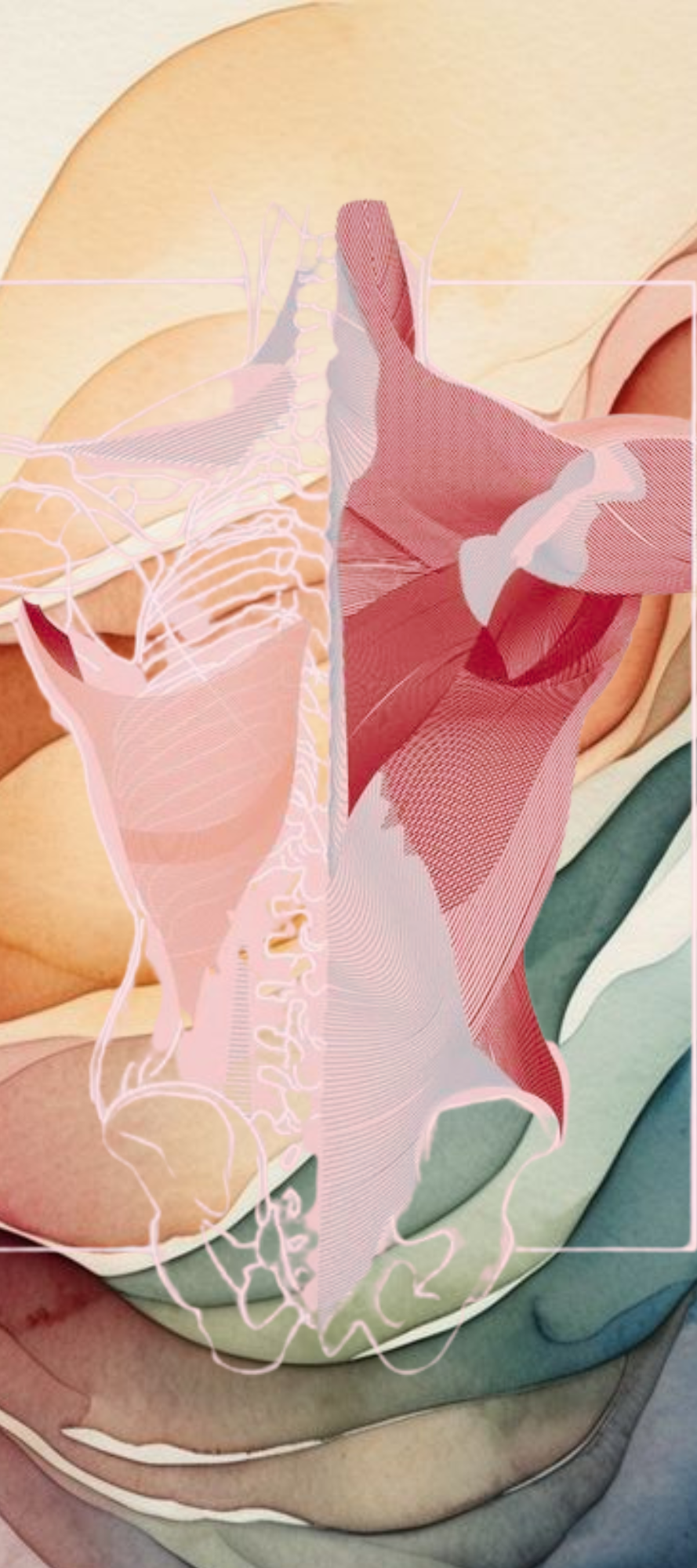
Foundation Module
Yoga Teacher’s Guide To and Through the Body
A seven-month advanced module for certified yoga teachers. The foundational module of our 300-hour Advanced Yoga Teacher Training Program.
Feb 21 · Mar 20 · Apr 17 · May 15
What a Saturday looks like

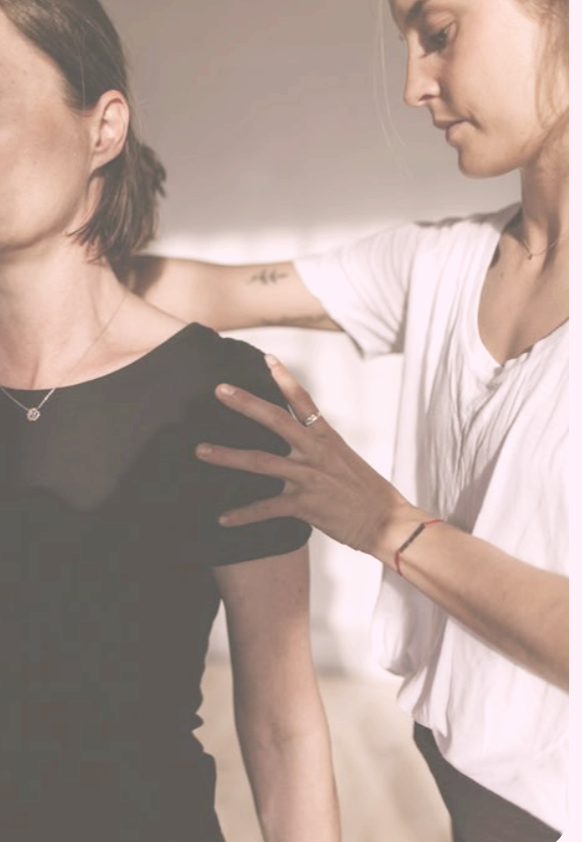
One region of the body, five hours. Say it's the hips.
The anatomy. We start with a lecture on the bones and the muscles, then move to function, pulling the hip complex apart and putting it back together.
An example: For the hips, the psoas is the muscle that restricts more people than any other. So we ask: why does it run from the spine through the pelvis to the leg? What is its main job? Which muscles play most closely with it, and how do we engage them together? Why is it tight and weak in nearly everyone who sits for a living? We find its pair in gluteus maximus and feel how, when the glute contracts, the psoas lengthens — and the reverse.
On the mat. Then we feel it. Warrior 3 is the showcase for the psoas — function, dysfunction, and how to succeed in a hard posture through better alignment and engagement. One psoas is engaging while the other lengthens at the same time. What happens if you flex the extended foot? What happens if you point it? What changes when you squeeze the glute on the extended leg, or draw the thigh and the hip point toward each other? How many muscles can we get working to support the shape? Then we take the hips into four more postures with entirely different shapes — Triangle, Boat, Pigeon, Half Moon.
You teach it. This is more than repeating cues. You teach the posture, then the psoas engagement, then you look at your partner in it. What does she need? What is restricting her? If she were going to hold this for five minutes, how would you help her recruit more muscle and keep her alignment?
Build. The psoas is one part of a complex system. We take each key element of the hip in the same order — anatomy and function, then exploration in your own body, then teaching it to a specific body.
Through the body. The last two hours are energetic rather than anatomical. We take up Little's chapter on the region we've just spent three hours inside, then ask what we feel in the hips — which vayus, which chakras, in the postures we just explored. How do you carry that into a cue, in metaphor, in word choice, in tone, without losing the anatomy? We brainstorm together and build a short sequence from those postures to produce a specific energetic experience.
That’s a little taste of one session.
There are eight: six look deeply at a region of the body, one explores the anatomy and application of the nervous system and fascia, and the last one brings everything together.
By spring, you will stop reaching for a standard modification and start reaching for another way in. If your student is struggling to balance, and a block takes them further out of alignment. You know more than the standard goal of the posture — you know that if they recruit the glute by flexing the foot they'll be more stable and the psoas will lengthen. And if that cue doesn't land, you know four other ways to ask for the same action.
That isn't a modification. That's teaching a student to use her body.
Seven months, region by region
Six of the sessions take one region of the body at a time and look deeply at its anatomy. We look at the bones of the feet or shoulder or hips or center, then the muscles, and then their function. Once we understand what that region of the body does and how, we apply it to postures. Then sequencing, and then we explore the energetics of that region.
In February we spend a full weekend together: the spine on Saturday, and on Sunday the nervous system that runs through it.
In May, we put the regions together, because that’s the question the whole module has been asking: how are all these regions connected and how can our knowledge of the interconnected body support our students’ safety and growth?
For each session, we read the chapter of Tias Little’s Yoga of the Subtle Body that matches the part of the body we’re studying as a guide to how energetics maps onto anatomy.
One · November 21 — Foundations and the Feet
Anatomical terms, and the function of bones, muscles, ligaments, tendons, and joints. An overview of the energetic maps. Then the feet: the bones, the muscles, what engagement changes, and what different positions of the foot do to everything above them. Reading a body through its feet — what pronation and supination do to a posture. Grounding energy through the feet, and lifting it.
Postures: Mountain, Tree, Warrior 2, Goddess, Wide-Legged Forward Fold
Reading: Intro and "From the Ground Up" prior to our first meeting.
Two · December 19 — The Hips
From knee to waist: bone structure and muscles, and how to recruit muscles to work together. Using the sitz bones and hip points to direct the pelvis. Building engagement and awareness from the hip socket. The key pairs — hamstrings and quadriceps, adductors and gluteus medius, abductors and gluteus medius, gluteus maximus and psoas — and how and why to teach with pairs at all. Apana, the downward wind, and the root chakra.
Postures: Warrior 2, Triangle, Warrior 1, Warrior 3, Bird Dog, Malasana, Boat
Reading: "The Pelvic Potential"
three · January 16 — The Center
The back, abdominal, pelvic floor, and diaphragm muscles — anatomy, function, and the cues that reach them individually and together. What that engagement does for a student, and what it does for a posture. The specific problems of the pelvic floor and the low back, and what to do about them. And the domes: the arch of the foot, the pelvic floor, and the diaphragm working as one stacked system.
Postures: Prone Backbends, Mountain and standing postures with foot, pelvic floor, and diaphragm engagement, Bridge and Wheel
Reading: "The Belly Brain” and “The Diaphragm”
Four · Saturday, February 20 — The Spine
Bone segmentation, and the differences in size and spacing that change what a spine can do. The muscles that support it and the techniques that engage them — including firing the multifidus through the chin and the back of the skull. Teaching from the center line. Anchoring through the skull and the sitz bones. The sacrum's role. The mechanics of twists, forward folds, backbends, and lateral bends, and how to build more engagement and more length in each. The low back: what causes problems, how yoga helps, what to look for. Then the chakras, one energy center at a time up the spine, and the traditional ways of reaching them.
Postures: Cat/Cow, Seated Lateral, Seated Twist, Bridge and Wheel, Triangle, Side Plank
Reading: "The Sacred Sacrum"
Five · Sunday, February 21 — The Nervous System, Fascia, and the Modern Energetic Maps
The anatomy and function of the nervous system, and what current research tells us about how the brain and the body talk to each other: how the brain predicts what the body will need, the brain networks that decide what deserves our attention, and interoception, the sense of what’s happening inside your own body. Polyvagal theory as a map of states, and where the science has gone since. Then fascia, the connective tissue that wraps every muscle and organ and sends the brain a constant stream of information about the body. And the modern maps (the Anatomy Trains, lines of fascia that run from the feet to the skull, and the polyvagal states) set beside the chakras and vayus.
Practice: Pranayama, Myofascial release, Meditation.
Reading: “The Crown Jewel”
Six · March 20 — The Shoulder
Shoulder bones and muscles, their function, and the cues that reach them alone and together. What shoulder engagement gives a student and what it gives a posture. The specific problems of the shoulder and the chest, and what a teacher can do about them. The heart chakra.
Postures: Twists, Heart Opening, Plank, Down Dog, Side Plank, Chaturanga
Reading: "The Lungs and the Lotus Heart"
SEVEN · April 17 — Arms and Legs, Head and Neck
The muscles and bones of the periphery, and the effect each has on the spine, the pelvis, and the shoulders. Cues that reach them individually and together. The specific problems of knees, wrists, elbows, and neck, and what to do about them. The throat chakra and the crown.
Postures: Hand to Big Toe, Warrior 1, Warrior 2, Triangle, Down Dog, Plank, Tree, Hero, Lotus
Reading: "Blue Throat"
Eight · May 15 — Putting it all Together
Each of you teaches a short sequence for one of the regions we’ve studied, built from its muscle pairs and its energetic map, and together the sequences travel the whole body, from the feet to the crown. You’ll get feedback from me and from each other (a first taste of the practicum and final presentation in the 300-hour), and we answer the question the whole module has been asking: how are all these regions connected?
Practice: teaching your regional sequence.
Energetics is part of the body
Every chakra sits on the spine, and so do the autonomic plexuses; the tradition placed seven wheels of energy along exactly the line the nervous system runs down. That's the closest correspondence between the yogic maps and the dissected body, and we teach it as one subject rather than two.
The feet belong to muladhara, the root chakra — stability, safety, basic needs — and to apana vayu, the downward-moving wind. When we ask a student to give her weight to the ground, we're asking her to stop holding herself up, and holding oneself up is what an overtaxed nervous system does all day. The physiological event is a drop in postural gripping. What she reports is I feel like I can finally put something down.
Grounding isn't the introduction to the practice. It's a practice in itself, and you'll learn to teach it that way.
Across the eight sessions, you'll work with the chakras, the vayus, the gunas, and the koshas — each one mapped to the region where it lives, and each one translated into plain language you can use in your teaching.
What We Don’t Do
We talk about the specifics of muscles, bones, and anatomical directions so we can communicate with each other and body professionals like physical therapists, doctors, or trainers. But you will not need to memorize the names. There won’t be a test on Latin names.
You’ll learn a new language—the language of moving, engaging, pausing, and feeling a body instead.
A student who leaves your class having learned the word piriformis and nothing about her own hip hasn’t learned much.
A student who feels the muscles engaging, releases decades of tension, notices the shift, and uses your cues in their daily life to keep pain from coming back has learned what we are after in this training.
The Reading
We read Tias Little's Yoga of the Subtle Body across the first six months, one or two chapters for each session, matched to the part of the body we’re studying. We discuss it during the session as a guide to uncovering the subtle, energetic body mapped onto the anatomical one.
Energetics are hard to learn and harder to teach in a meaningful way. But accessing the subtle body ourselves and helping our students to latch onto a deeper meaning, feeling, and experience is non-negotiable for a yoga teacher. It’s what yoga is.
Tias Little has a remarkable set of expertise. Not only has he been one of the most prominent yoga teachers in the world for decades, but he is also a bodyworker and has an MA from St. John’s in Eastern Philosophy, Literature, and Classics. I’ve been lucky enough to study under him for the last few years, which has changed the way I read and teach energetics and anatomy.
Reading him alongside our study of specific regions of anatomy gives us a starting point and a blueprint for the complex study of energetic maps and the subtle body generally. The book becomes the ground the energetic work is built on.
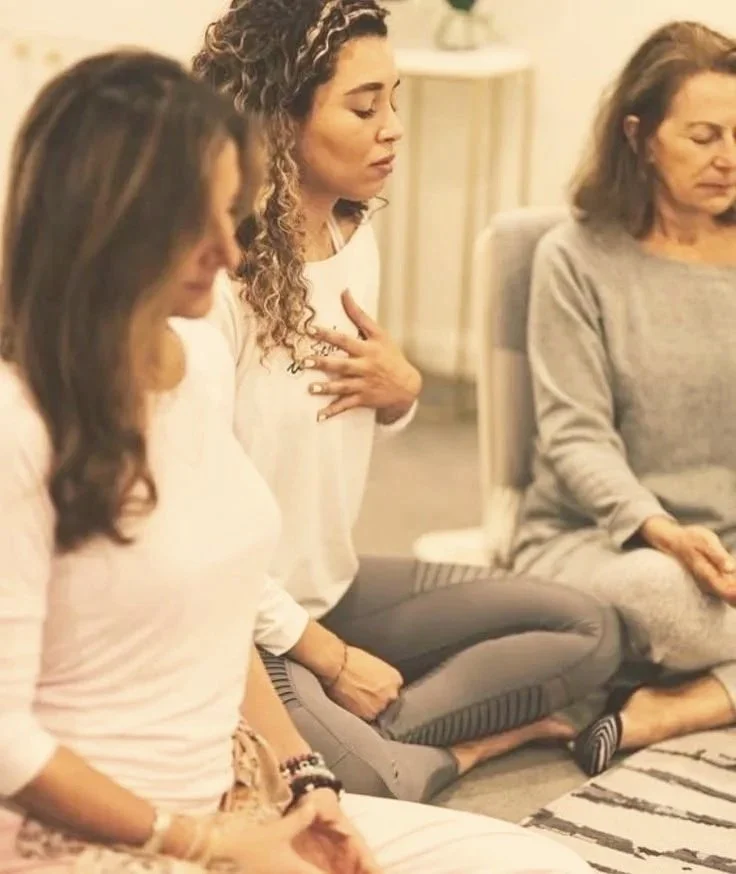
The Teacher’s Circle, included.
The Circle is a specialized class from 6:45 to 7:45 pm, and a case study discussion from 7:45 to 8:45 pm on the Second and Fourth Mondays of each month.
The class is built as a demonstration of how to incorporate what we are learning that month and is taught by me. After class, I break down every choice I made. Then we discuss real teaching situations and work them out together. Every other profession that serves people the way we do trains its people this way. We need it too.
One of the two evenings per month is required as part of this module and counts toward the total 54 CEU hours of this training.
In the interest of accessibility, and knowing that many students commute from over an hour away for this training, I will livestream both the class and the discussion.
Note: On its own, this module includes one Monday evening a month. If you’re accepted into the 300-hour certification, the full Teacher’s Circle is part of your enrollment for all seven months: two group classes a week at Shine, plus both Monday evenings. The membership (Teacher’s Circle 2x per month plus group classes 2x per week) is also available on its own for $99 a month-a deeply discounted membership rate to encourage practice!
Where this training comes from
A few years after I finished my Yoga Teacher’s Certification at one of the largest and oldest training schools in the country, Kripalu, my body was wrecked by Stage 3 breast cancer, and even more so the treatment.
Muscles were cut through, tissue was shrunk, lymphedema and neuropathy were constant problems, and then there was the fear.
I found that my training had given me none of the knowledge or practice that would help a person like me. I knew some Sanskrit, some philosophy, the names of the postures, and how to guide a person into the shape, but not much more.
And so I started using myself as a guinea pig. I felt and experimented in every yoga posture. This muscle has stopped working, and this one is overcompensating. How do I get it to start working?
I stopped trying to get into hard postures or move quickly and started focusing on what my body was doing and how I could better balance its engagement.
From there, I started learning. I earned 300 hours each with Tiffany Cruikshank and Jason Crandell, the two teachers who I felt most understood how to cue engagement. They were also the two teachers who shared a desire to explore what was happening to the body, to break the rules and find new ways to feel and teach. I also studied for years with Dr. Ray Long. What they taught me is that the smallest cue can light up a whole body, and that things students believe are impossible for them are often one adjustment away. I was in a training with Dr. Long where student after student who had never done a headstand floated right up, because of his sequencing and his cuing.
I wanted that for me and for my students, and it's what this module is built to give you.
Sara Szeglowski, MA, MATC, REYT-500· Shine Yoga · Hamburg, New York
Tuition
$2,060, or six monthly payments of $350 each.
Or apply to the 300-hour certification by October 26 for priority seating. Enrollment in the Certification Program is $2,695 (seven payments of $385), and along with this module it includes: a comprehensive manual of what yoga teachers need to know—the Body of Knowledge; seven months of the full Teacher’s Circle (2 classes per week and 2 teacher’s circles per month); a minimum of Four Mentorship sessions with me; and 10% off every module and elective afterward. See everything the Certification Program includes »
Non-refundable. Payment plans are a binding contract. If something comes up and you can not complete the program, you can enroll the following year, but payment must be completed for this training as scheduled.
300-hour applicants are seated first, through October 26. On October 27, any remaining seats open to teachers taking the module on its own will become available. Registration for this module closes November 9.
Eleven students accepted.
Common Questions
I trained somewhere else. Will I be behind? No. This module assumes a 200-hour foundation and nothing beyond it. Teachers come to us from programs all over, and the first Saturday puts everyone in the same language — that's part of what it's for. If anything, it's the module I'd most want a teacher trained elsewhere to take first, because everything else in the Deep Yoga Method stands on it.
I already did anatomy in my 200-hour. Is this a repeat? In a 200-hour, anatomy serves the posture. You learn the pose, then what's happening inside it, and you leave able to teach those poses beautifully. Foundations turns that around. Here the body is the unit and the postures come afterward — one region at a time over seven months, the bones and the muscles and what they do and why, and then how to teach it so a student feels their bodies working.
Do I have to enroll in the 300-hour? No. Foundations is open to any certified teacher on its own. If you pursue the 300-hour certification later, these 56 hours count toward it.
What's the difference between registering for this module alone and applying for the 300-hour Certification Program? When you’re accepted into the 300-hour certification program, this module becomes the first part of it. Your enrollment ($2,695) includes Foundations, the Body of Knowledge, seven months of the full Teacher’s Circle, four mentorship sessions with me, observation and feedback on your teaching, a session to build the rest of your program, and 10% off every module and elective you take afterward. Bought separately, those would cost $3,405.50. Module by module, you gather the knowledge and tools you need to be a better teacher and provider of the many different approaches to sharing yoga. The hours count as Yoga Alliance CEUs. When you enroll in the certification program, you also get expert guidance (along with the list above). You finish with a direction and a portfolio. See everything enrollment includes »
Can’t join this year? If you’re ready to commit to the 300-hour certification program, you can apply now for next November’s class. Once you’re accepted, your seat is held, your price is locked, and the trainings you take this year count toward your program from the start.
Is the Teacher's Circle required? One evening a month, during the seven months of the module, is part of the module and part of your hours, so yes. If you have to miss one, tell me and we’ll catch you up. After the module, it’s up to you if you want to continue.
I live an hour away. Can I do the Circle by livestream? Yes. The Livestream option is designed for you.
Do I have to buy the book? Yes — Tias Little’s Yoga of the Subtle Body. It’s the only book required for the module. We read a chapter for each session, matched to the region we’re studying, and discuss it during the session rather than on a separate evening. The manual for the training is included.
What if I miss a Saturday? WWe are a small group, which allows for limited date or time changes if everyone is in agreement. Because we meet only once a month (twice in February), there is also more room for flexibility. Propose any changes when you enroll, and I will bring it to the group.
I've been teaching for fifteen years. Do I really need this? It isn't a review, and I’ve seen very few teachers teach this way. The body mechanics, functional anatomy, posture analysis, reading of the body, and the region-by-region work are graduate-level material, and experienced teachers tend to be the ones who get the most out of the partner work, because they have more teaching to test it against. The only book, let alone training, that layers the Subtle Body onto the Physical Body is the one we’re reading. It’s knowledge and practice that most teachers don’t have.
Do I need to be physically able to do every posture? No. We work with the body you have, and much of the day is observation, partner work, and cuing rather than practice.
Is there homework? A chapter of Tias Little/s book each month, and your own exploration on your mat.