

300-Hour Advanced Yoga Teacher Certification · Hamburg, NY
Elevate Your Teaching, Expand Your Impact
Knowledge deep enough to change how you teach. And more than one way to deliver it.

Beyond the Group Class.
Most advanced yoga teacher trainings prepare you to do one thing better: lead a group class. This one is different.
A teacher who can only lead group classes is limited in her ability to serve students and to make yoga a career.
The student in chronic pain doesn't need a louder cue in a vinyasa class — she needs a private session designed around her body. The teacher heading into burnout doesn't need another class on her to-do list — she needs a retreat that restores her. The healthcare system looking to integrate yoga doesn't need a thirty-minute class twice a year — it needs a partner who can design and present a program that will convince leadership to do it.
Each specialty module pairs clinical or somatic subject matter with a teaching format you'll learn to deliver:
Foundations: The Teacher's Guide To and Through the Body — functional and energetic anatomy, applied across every teaching context.
Rest & Retreat — restorative yoga and yoga nidra, paired with how to design, market, and lead retreats.
Chronic Pain, Cancer & Private Sessions — evidence-based pain protocols, paired with how to structure and price private work.
Women's Health & System Integration — hormonal health across a woman's life, the pelvic floor and deep core, paired with how to build partnerships with healthcare and community organizations.
Fascia & Somatics — the science of why yoga relieves stress and pain, with deep dives into somatic technique, myofascial release, and yin.
If we believe the teacher is responsible for the student's success — and we do — then we have to prepare teachers for the full range of formats students need.
Two ways to study with us
Take Trainings as They Come
Apply for the 300-Hour Certification
What a Saturday in the Foundation module looks like
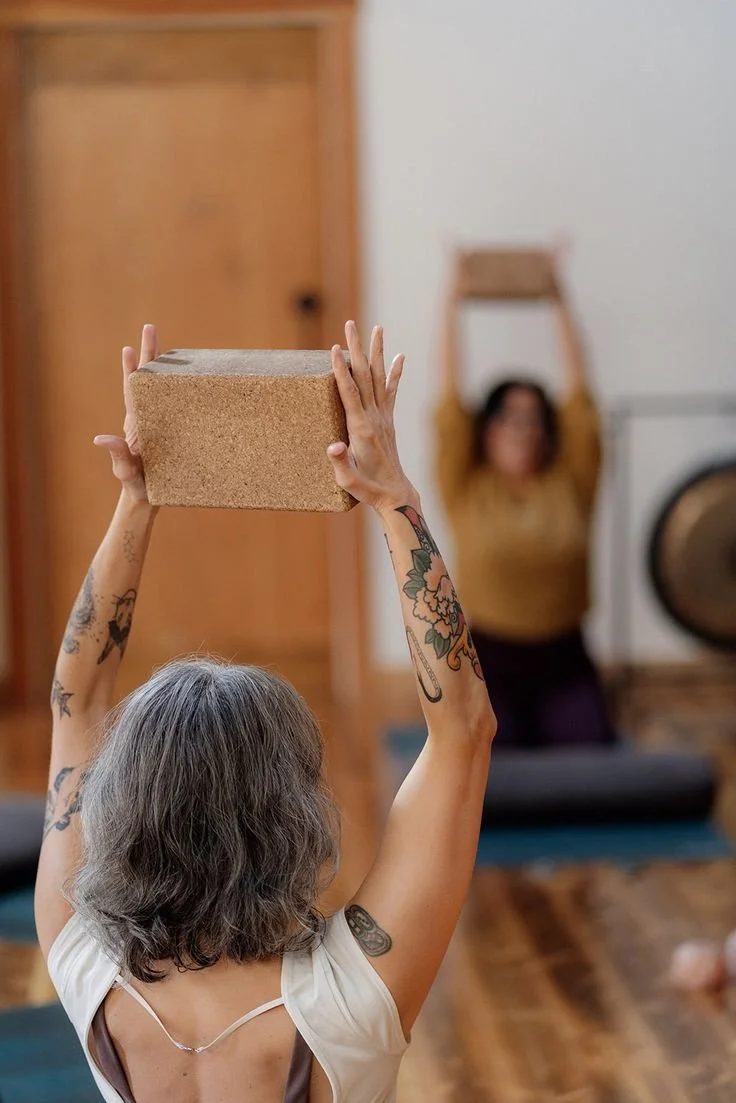
The Foundation Module.
Eight Saturdays, five hours each, one region of the body at a time. Say it's the hips.
The Anatomy
We start with a lecture on the bones and the muscles, then move to function. We look at the whole hip complex over our time together, pulling the pieces apart and then putting them all together.
For the hips, the psoas is an essential muscle that restricts a lot of people’s ability to do postures. We would begin by asking, why does the psoas run from the spine through the pelvis to the leg? What is its main job in the body? What muscles play most closely with it, and how do we engage them all together? Why is the psoas tight and weak in nearly everyone who sits for a living? We find its muscle pair in the glute max and feel how, when the glute contracts, the psoas lengthens and vice versa.
Then we discuss how to use all that knowledge for greater stability, strength, and mobility in a posture.
On the mat
Then we feel it in postures. We explore our own bodies. For the psoas, warrior 3 is a showcase for function, dysfunction, and how to succeed in this challenging posture through better alignment and engagement. One psoas is engaging, and the other is lengthening at the same time. What happens if we flex the extended foot? What happens if we point it? What happens when we try to kick up the front leg? What happens if we squeeze the glute on the extended leg? Draw the thigh and the hip point toward each other; what changes? How can we get as many muscles as possible working to support the posture? Then we explore the hips in four more postures that have very different shapes, like triangle, boat, pigeon, and half moon.
You teach it
This is more than repeating cues. You’ll teach the basic posture, the psoas engagement, and then look at your partner in the posture. What do they need? What are their restrictions? If they were going to hold the posture for 5 minutes, how could you help them recruit more muscles and maintain alignment?
Build
While the psoas is essential, it is part of a complex system. We look at each key element of the hip structure in the same way—anatomy and function first, then exploration in our own bodies, then teaching it to a specific body.
Through the body
The last two hours are energetics rather than anatomical. What energetics do we naturally feel in the hips? Which vayus, which chakras can you feel in the postures we just explored? How do you bring that into a cue — in metaphor, in word choice, in tone — without losing the anatomy? We brainstorm together and develop a short sequence using the postures we explored to support a specific energetic experience.
That's one Saturday. There are eight, and each one explores a different region of the body.
By spring, you will stop reaching for a standard modification and start reaching for another way in. When your student is struggling to balance, but using a block takes her even more out of alignment. You know, not just the standard goal of the posture; you know that if they recruit their glute muscle by flexing the foot, they will be more stable, and the psoas will lengthen. And if that cue doesn’t land, you know four other ways to ask for the same action. That's not a modification. That's teaching your student to use their body.
This is where the principle we started from stops being a philosophy and becomes something you can do on a Tuesday night with fourteen people in front of you and no idea who's walking in. There is always another way in. This module is where you learn to find it.
It's also why we do this in a room together rather than over video.
The Foundation Module begins October 17, 2026.
Eight Saturdays, 12–5 pm, in Hamburg. $2,060.
Open to any teacher with a 200-hour certification — no application required.
Registration closes October 1st.

We meet in a room, not a Zoom
This program is in person so that you can apply your knowledge immediately. That's how it sticks. That's how you see the patterns of the body and start applying it to your class that week.
The good news is that it asks less of your calendar than you'd think. Eight Saturdays for the Foundation Module, then the weekends you choose for modules and electives. There's no weeknight, which opens the geography up considerably — one of our students drove in from Canandaigua. If you've assumed a serious advanced training means relocating or settling for online, it doesn't.
If you would like to work towards a 300hour Certification, you will need to fill out an application.
Once you are accepted, I’ll help you compose your 300 hours. Everyone takes the Foundation Module and at least two specialty modules. Beyond that, the electives you choose depend on what you want to teach and who you want to serve — which is the whole point. A teacher heading toward private work with chronic pain patients should not be taking the same 300 hours as one building a retreat business.
Apply first and build the training you need.
How to build your 300-hour certification
Your Required Hours
Every student wanting a 300-hour certification completes the same core. This is what makes the program what it is. The philosophy for what a teacher needs is here. You build from this foundation.
Foundation Module: Yoga Teacher's Guide to and Through the Body, 55 hours. Eight Saturdays, October through May, exploring the physical and energetic body and learning how the body works, doing yoga so you can customize your teaching to the student in front of you.
Two or More Specialty Modules, 30 hours each. Each module pairs clinical or somatic subject matter with a teaching format you'll learn to deliver — retreats, private sessions, organizational partnerships, or somatic modalities. You choose which modules based on the work you want to do. Two is the minimum.
Individual Mentorship with Sara, 4 hours minimum. Scheduled across the certification at your pace and according to what you need.
Teaching Practicum, 5 hours minimum. Whatever modality you are interested in, whether it’s teaching alignment-based classes, private sessions, retreats, or something else, I’ll observe you teaching and provide feedback. Your plan and revision based on feedback will become part of your Body of Work.
Retreat, 12 hours. An immersive experience where you get to know each other and have the space to not only absorb the information, but also to decide what you most want from the experience.
Independent Study & Your Body of Work, 15 hours minimum, 30 maximum of reading, research, sequence development, and portfolio work outside of class. This will become a part of your Body of Work.
Final Presentations 10 hours. A 45-minute presentation of your teaching philosophy, your specialty, and a teaching demonstration. Presentation will be made to your peers, and you will participate as a peer.
Required total: approximately 160 hours.
Not ready to apply? Every module and elective is open to any teacher with a 200-hour certification; no application required. Simply enroll in the individual components. If you decide later to pursue the certification, the hours you've already done count toward it.
You Build the Rest
The remaining hours — roughly 140, depending on which modules you choose — come from a menu designed to let you shape the training around the teacher you're becoming:
Additional Specialty Modules — 30 contact hours each. Go deeper into more populations and formats.
Weekend Electives — 5 to 12 hours each. Self-contained deep-dives into specialized topics: teaching beginners, healthy aging, the business of yoga, hands-on assists, philosophy, sequencing, and more.
Teacher's Circle — a weekly teachers' class (1 hour, designed to teach you something specific each week) and a monthly case-study circle (1-2 hours, where we examine real teaching situations together and problem-solve as a group).
You're building to 300 hours. Everyone exceeds it — most land between 305 and 330 — because this approach is much less about collecting a certificate and much more about learning. It’s addictive!
Two Ways This Might Look
A teacher heading toward private work with chronic pain patients should not be taking the same 300 hours as one building a retreat business. That's the principle. Here's what it looks like in practice.
The Generalist
This is the teacher who wants depth in multiple populations — chronic pain and women's health, or rest and somatics — and plans to build a practice around that expertise, providing a variety of services—privates, retreats, community partnerships, and classes.
They might add the following onto the requirements to gain that level of knowledge:
Four specialty modules ( rather than two)
Six weekend electives,
Teacher's Circle ( especially the case studies).
The Specialist
This is the person who has a population they want to work with and an approach they want to learn to deliver. If this person is interested in Women’s Health and delivering private sessions.
They would add the following onto the required components:
Module 3 (chronic pain and private sessions)
Module 4 ( women’s health and integrating systems),
10 or more electives, which would teach them different ways to work with their population.
This teacher would also want more mentorship hours and more time to develop their Body of Work and presentation because they would want to know everything they could about how to best serve their population.
The program looks different for each person because you are different. The required core is the same because the standard is the same.

Join us!
Tuition
Foundational Module (required)—55 hours —$2060
Specialty Modules— (Modules 2,3,4, & 5)—30 hours—$1125 each
Weekend Electives—5-10 hours—$150-$299
Individual advising and practicum: $500–$1,500, depending on the hours your specialty needs.
Typically, a private session focus needs about four hours. Alignment-based classes, closer to eight. A retreat is twelve, and includes my time attending it. But the number of hours of one-on-one is up to you. We'll settle the number together once we know what you're building.
These are the hours we schedule. In practice, I don't stop when they run out — I want this to be a presentation of your best work and will provide the help you need to see it through. But the scheduled hours are what we plan around.
Standalone Mentorship is available for $145/hour
Retreat—$300 at Shine. Approx, $1200 destination.
You pay as you go, offering by offering. There's no tuition bill for the whole certification and no debt hanging over a three-year process.
If you'd rather commit up front: teachers who commit to the full certification at application can pay for a collection of modules and electives in quarterly installments and receive a discount. Talk to me during your consultation.
If cost is a barrier: limited scholarships are available, and I'd rather work it out than lose a teacher who'd thrive here.
Built like a graduate program
I'm your project advisor.
I'm both the teacher you see on the weekends and your advisor across the whole certification. I'll know what you're building, where you're stuck, and what's gotten stronger since October — and as a result, I can personalize the reading, the mentorship, and the capstone.
Here's what that means in practice:
Individual mentorship, scheduled around your pace, across the whole certification. We size the hours to what you're building.
The Teacher's Circle
This is the thread. Students join a weekly class designed specifically for teachers and a monthly case-study circle where we examine real teaching situations and problem-solve together. This is the room where the questions that only surface once you're teaching get worked through with peers who understand.
Case studies are a part of training for any profession where you interact with other people. Yoga should have this too.
Lecture that goes deep.
Every module and elective has its own manual and its own reading list. Everything begins with knowledge and then applied so you know it in your bones, and teaching it becomes second nature.
Practicum with revision.
Whatever you are offering—classes, peer sessions, private work, or retreat — I’ll observe, provide feedback, and support your revision each time. Not a performance review. A process of getting better.
A capstone of professional scope
This is developed with my guidance across the final stretch of your certification. This is your Body of Work that you’ve been building to over the whole certification.
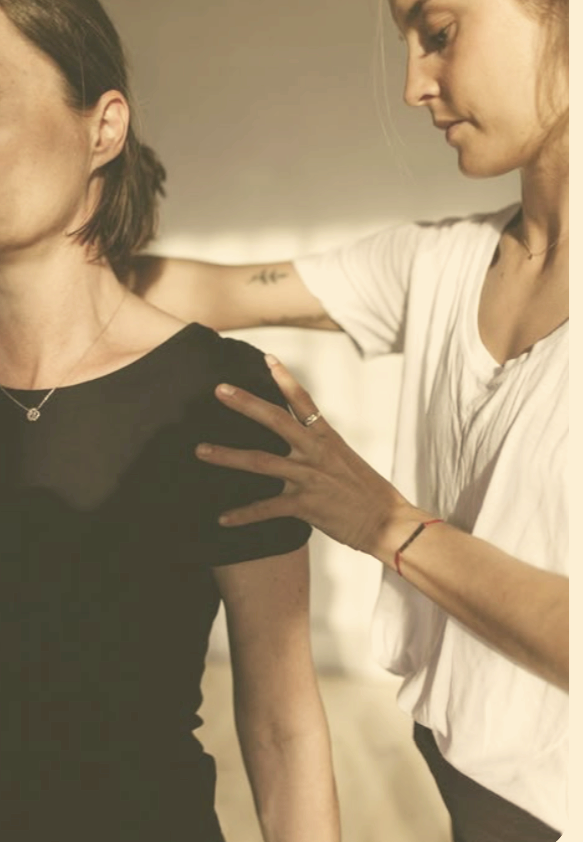
A career-launching capstone.
Your body of work
Most advanced trainings end with a quiz. This one ends with something you built.
Working with me across the certification, you'll develop the thing you want to bring into the world — a specialized workshop, a retreat program, a private practice model, a proposal for a healthcare system or a school district. Not an assignment. The offering you'll be teaching a year from now.
This is the part I'd point to if you asked what makes this training different. A 500-hour credential on its own is worth less than people think — I tell my own teachers to list their trainings and their expertise instead. What's worth something is being able to say I built the chronic pain series that runs at the recovery center.That's what we're making here.
It's required to complete the certification, because a certificate with nothing built behind it isn't worth much.
If that sounds intimidating
Some of you just read that and thought this is a lot.
Some of you thought this is exactly what I've been looking for. Some of you thought both, at the same time.If you did your Yoga Teacher Certification with me, you know how this goes: we progress little by little, and I am with you at every step.
My trainings have a high standard and I will expect you to work hard. I also believe in kindness, safety, and support, because that's the only way anyone learns and grows.
You will not be handed a topic and wished well. We'll figure out what you're building together, and then we'll build it.
"Sara helped me see there was so much more possible than the Saturday morning class. I now teach retreats and specialized workshops. I've created something I didn’t know was possible and is really what I want to do." - Emily
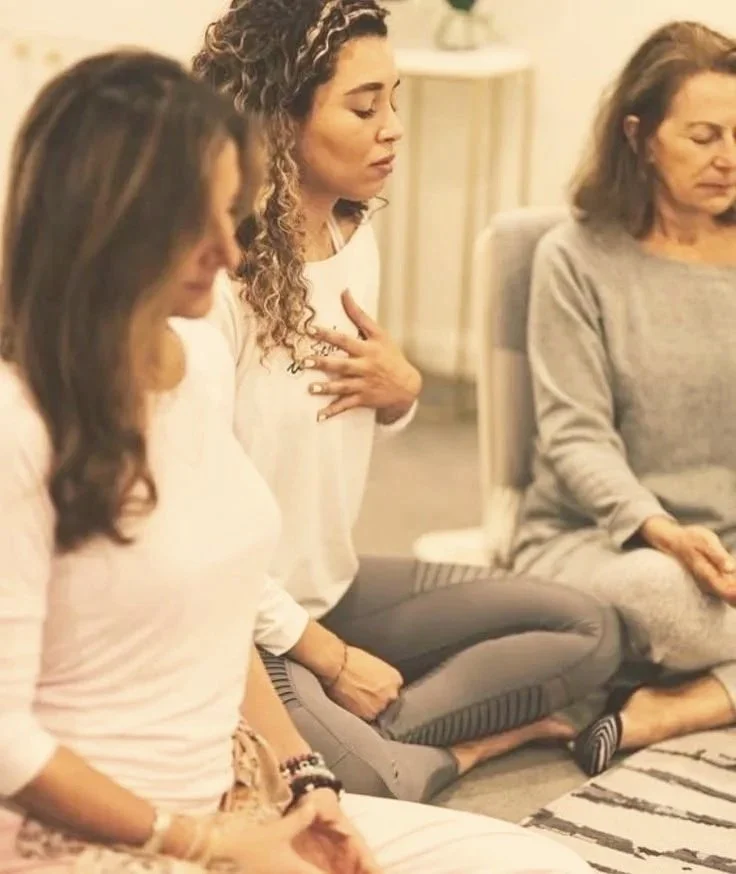
Includes:
Reading list developed specifically for you by Sara
Personal practice and documentation
Development of specialized sequences and class plans, private sessions, retreat plans, or business presentations
Research project in your area of interest
Regular reflection and integration assignments
Mentoring Sessions
Receive personalized guidance through one-on-one sessions with Sara and guided assignments. These sessions offer:
Individualized feedback on your teaching
Support for challenges and questions
Guidance on your independent study focus
Career development planning
Regular check-ins on your progress
Teaching or Offering Practicum
Apply what you’ve learned through supervised teaching experiences. Outcomes can include any of the following:
Practice teaching sessions with peer feedback and revision ( recorded or in studio)
Community class opportunities with mentor observation and revision
Specialized workshop development
Video teaching submissions with detailed feedback and revision
Final teaching demonstration
Private Sessions with comprehensive notes,
A comprehensive retreat plan
A business proposal and presentation for yoga services in a particular field
Final Presentation & Portfolio
Showcase your growth and specialization through:
45-minute presentation of your teaching philosophy and specialty
Should include a teaching demonstration of one of your signature sequences/offerings
Comprehensive teaching portfolio including:
Statement of teaching philosophy
Research to support approach
Three signature class sequences or privates with rationales or other application
Specialized workshop outline
Marketing materials for your unique offerings
Resource materials for students
Independent Study, Mentorship, & Your Body of Work
The required hours above are the structure. Here's what happens inside them.

Student Love
"After five years of teaching, I was burnt out.
The Deep Yoga Advanced Training completely revitalized me and my teaching career. The format allowed me to focus on my interests while the mentorship helped me identify my unique strengths and develop offerings that truly set me apart.
It reminded me that I love teaching and love yoga.”
-Lindsey
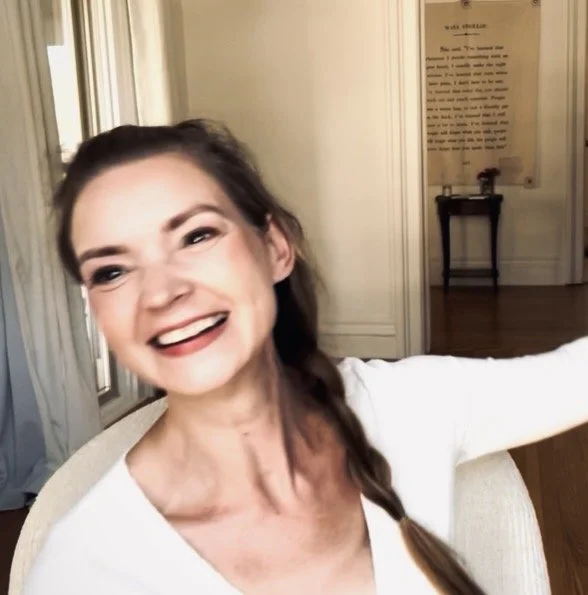
Meet Your Mentor & Guide
Sara Szeglowski, MA, E-RYT 500, YMTS
Sara brings 20+ years of experience bridging wellness, healthcare, and education to guide your journey:
Dual Master’s Degrees in Comparative Literature & Technical Communication
1500+ hours advanced yoga teacher training
11-year successful studio owner
7-years as Yoga Teacher Trainer
Former Writing and Comparative Literature professor.
Former healthcare liaison between Ivy League institutions and federally funded programs
Program developer in primary and behavioral health who secured millions in funding
Presenter at IAYT and Neuroscience & Yoga conferences
What This Means for You:
Sara has walked the path you're on. From writing her first proposal to presenting to skeptical administrators to building sustainable programs, she's navigated every challenge you'll face. Her mentorship provides practical guidance based on real experience, not theory.
Extensive experience teaching and presenting complex information. Unlike most Yoga Teacher Trainers, Sara isn’t just a yoga teacher. She has extensive experience developing curriculum and knows what helps students to learn.
"Sara's mentorship was transformative because she'd actually done what I was trying to do. When I got stuck on my school district proposal, she knew exactly which concerns to address because she'd been in those meetings herself." - Jen

What You’ll Learn
Explore the 5 modules and this year’s electives in more detail.
FAQs
Do I need a 200-hour certification to apply?
Yes. The Advanced Certification builds on the foundation of a 200-hour certification. Your 200-hour can be from any Yoga school. The exception is the Weekend Electives. The focus is on teaching teachers to teach and it is graduate-level material and delivery. However, if you are interested in exploring an area deeply and understand the goal of our delivery, you are welcome to join us.
Do I have to take two specialty modules?
Yes. Taking two specialty modules gives you the breadth of knowledge that you should have as an advanced teacher while still allowing you to specialize.
Can I substitute prior advanced training from another school towards my hours?
I’m afraid not. Our program is different from most, and our outcomes reflect our content and practices.
What if I only want to take a few workshops or modules without applying?
That's completely fine. Workshops and modules are available as standalone continuing education for any teacher with a 200-hour certification — no application required. If you later decide to apply for the certification, the hours you've already completed will count toward it.
Are payment plans available?
The certification is paid as you go, which is a payment plan by design. If you'd rather commit to the whole certification at application, you can pay in quarterly installments and receive a discount.
Is there financial aid or sliding scale tuition?
Limited scholarships are available. Talk to me during the application process if cost is a barrier — I'd rather work it out than lose a teacher who'd thrive in this program.
How much time will this take outside of class?
Reading, personal practice you document, and the work of building your offering. Plan on a few hours most weeks, more as you approach your presentation. This is not a training you can attend and absorb passively — that's deliberate.

Ready to take your teaching to the next level?
The Foundation Module begins October 17, 2026. Applications close October 1st.
Questions? Email sara@shineyogawny.com
"The decision to invest in advanced training was the turning point in my teaching career. Don't wait to take your teaching to the next level."
— Susan